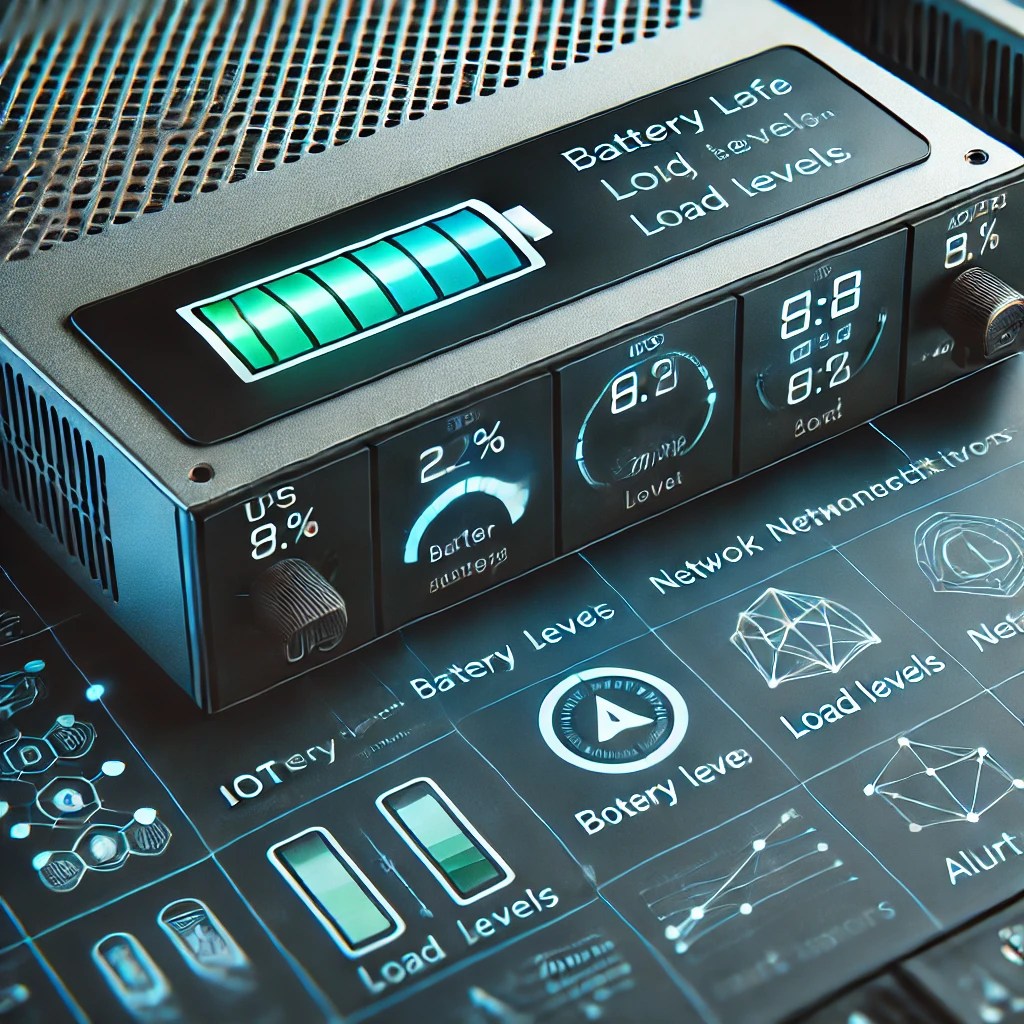

To design an IoT device that can monitor a UPS (Uninterruptible Power Supply) system, an engineer would need to consider both hardware and software elements. Here’s a breakdown of the key research and engineering areas needed:
1. UPS Components and Parameters to Monitor
Battery Health: Voltage, temperature, charge/discharge cycles, and capacity.
Input/Output Power: Voltage, frequency, and current to check for stability.
Load: Percentage of load on the UPS to prevent overloading.
Temperature: Internal temperature of the UPS and its surroundings.
Humidity: For environments where moisture might affect the UPS.
Runtime: Estimated runtime remaining based on load and battery health.
Researching these elements will help identify which sensors are required.
2. Sensors and Actuators
Voltage Sensors: To monitor battery and power levels.
Current Sensors: For load monitoring.
Temperature and Humidity Sensors: To check environmental conditions. Hence, actuators are required to work with temperature and huminidity sensors to provide feedback to the IoT systems.
Battery Level/Health Sensors: Specifically designed to measure battery state and lifespan.
3. Communication Protocols
Wireless Protocols: Wi-Fi, Zigbee, LoRa, or NB-IoT for long-distance data transmission.
MQTT, CoAP: Protocols that are lightweight and efficient for IoT communication.
Security: Ensuring secure data transmission, possibly using TLS or similar encryption methods.
4. Power Management
Low-Power Consumption Design: As IoT devices may need to function independently or from the UPS battery, minimizing power usage is essential.
Battery or Backup Power: A secondary battery or power backup solution in case the UPS fails.
5. Data Processing and Storage
Microcontroller or Processor Selection: A device like ESP32, Arduino, or Raspberry Pi for controlling sensors and managing data.
Edge Computing: Processing some data locally to reduce bandwidth and delay, which can be critical for real-time alerts.
Data Storage: Choosing local storage or cloud solutions (e.g., AWS, Azure IoT Hub) for storing historical data and performing analysis.
6. User Interface and Alert Systems
Dashboard Design: A web or mobile app interface for viewing data, charts, and system status.
Alerts and Notifications: SMS, email, or app-based notifications for critical status changes (e.g., battery low or overload).
7. Regulatory Compliance and Testing
Safety Standards: Understanding relevant electrical and wireless regulations, especially if the device will be commercialized.
Environmental Testing: To ensure the device can handle the operating conditions (temperature, humidity, etc.).
Combining these aspects will help in building a reliable, safe, and effective IoT solution for monitoring UPS systems.
设计一个能够监控UPS(不间断电源)系统的物联网设备,需要工程师在硬件和软件方面进行深入研究和设计。以下是关键的研究和工程设计领域:
1. UPS组件和监控参数
电池健康状态:监测电压、温度、充放电循环和容量。
输入/输出功率:监测电压、频率和电流,以确保稳定性。
负载:监测UPS的负载百分比,以防止过载。
温度:监测UPS内部及周围环境的温度。
湿度:在潮湿环境中监测湿度,防止UPS受损。
运行时间:根据负载和电池健康状态估算剩余运行时间。
研究这些元素有助于确定所需的传感器。
2. 传感器和执行器
电压传感器:用于监测电池和电源电压。
电流传感器:用于负载监测。
温度和湿度传感器:用于环境条件的监控。
电池电量/健康传感器:专门用于测量电池状态和寿命。
3. 通信协议
无线协议:Wi-Fi、Zigbee、LoRa或NB-IoT用于远距离数据传输。
MQTT, CoAP:这些协议轻量且高效,适用于物联网通信。
安全性:确保数据传输安全,可能需要使用TLS或类似的加密方法。
4. 电源管理
低功耗设计:由于物联网设备可能需要独立运行或使用UPS电池,降低功耗至关重要。
备用电源:在UPS失效的情况下,使用次级电池或备用电源解决方案。
5. 数据处理和存储
微控制器或处理器选择:选择如ESP32、Arduino或树莓派等设备,用于控制传感器和数据管理。
边缘计算:本地处理部分数据,以减少带宽消耗和延迟,这对于实时警报非常重要。
数据存储:选择本地存储或云解决方案(例如AWS、Azure IoT Hub),用于存储历史数据和执行分析。
6. 用户界面和警报系统
仪表板设计:设计一个网页或移动应用界面,用于查看数据、图表和系统状态。
警报和通知:通过短信、电子邮件或应用通知发送重要状态变化警报(例如,电池低电量或超载)。
7. 合规性和测试
安全标准:了解相关的电气和无线通信法规,尤其是设备商业化时。
环境测试:确保设备能够适应工作环境(温度、湿度等)。
结合这些方面,可以设计一个可靠、安全且有效的UPS监控物联网设备。
 Data Center Health