
Maintaining the rectifier and inverter components of a UPS system in a data center is crucial for ensuring consistent power delivery and avoiding downtime. Here are some of the current advanced techniques and best practices for this purpose:
- Modular UPS Systems: Modern data centers are increasingly using modular UPS systems. These systems allow for scalability and redundancy by adding or removing modules as needed, making maintenance and upgrades simpler and more efficient [❞].
- Advanced Monitoring and Diagnostics: Implementing sophisticated monitoring tools that provide real-time data and predictive analytics can help in identifying potential issues before they lead to failures. This includes monitoring battery health, load levels, and the performance of rectifiers and inverters [❞].
- Use of Silicon Carbide (SiC) Technology: Incorporating SiC in power electronics enhances efficiency and reduces heat generation. This results in better performance and longevity of UPS components, including rectifiers and inverters [❞].
- High-Efficiency Designs: UPS systems are now designed with high efficiency in mind, often achieving up to 99% efficiency in eco-mode. This reduces energy loss and improves overall system performance, which is critical for maintaining the integrity of rectifiers and inverters [❞].
- Transformerless UPS: Transformerless UPS designs are becoming more popular due to their higher efficiency and smaller footprint. These systems reduce the need for maintenance and improve the power density of the data center [❞].
- Regular Maintenance and Testing: Scheduled maintenance, including battery inspections, thermal imaging, and load testing, helps in ensuring that the UPS system’s rectifiers and inverters are functioning correctly. Preventive maintenance can significantly reduce the risk of unexpected failures [❞] [❞].
By employing these advanced techniques, data centers can improve the reliability and efficiency of their UPS systems, ensuring continuous operation and reducing the risk of power-related disruptions.
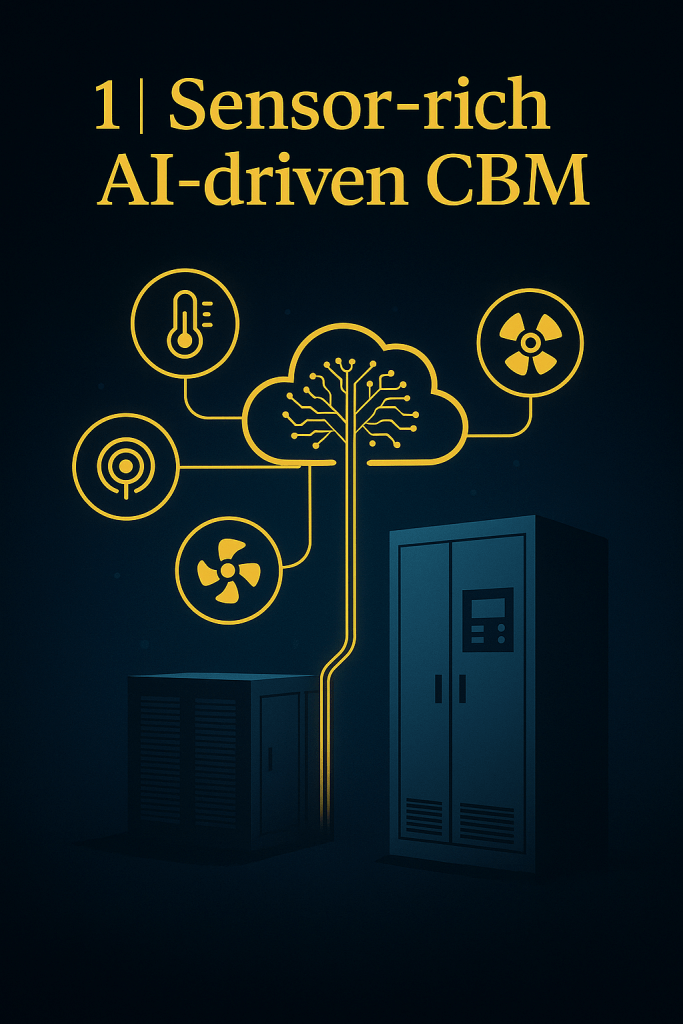
1 | Sensor-rich, AI-driven condition-based maintenance (CBM)
| What it does | How it helps the rectifier / inverter | Key enablers |
|---|---|---|
| Continuously streams temperature, current‐waveform, switching-cycle count, fan RPM and capacitor ESR data from the power modules to a cloud analytics engine. | • Flags early IGBT/MOSFET gate-drive drift, diode stress or capacitor end-of-life long before a failure. • Schedules repairs only when the data show real wear, extending module life and halving planned outages. | Natively connected UPS (e.g. Schneider Electric Galaxy VXL) plus an IoT gateway feeding an AI service that returns a “health score” and recommended intervention window blog.se.com |
Implementation hints
- Add inexpensive Rogowski-coil “clip-on” current sensors to legacy rectifier legs; their harmonics trace is an excellent early-warning metric.
- Tie the CBM platform into your CMMS so a work order is created automatically when a health score falls below your chosen threshold.

2 | Modular, self-isolating cores for “live” maintenance
Modern large frames (e.g. Vertiv Trinergy) are built from 500 kW hot-swappable cores, each containing its own rectifier, inverter, charger and controls. One core can be taken out, bench-tested or upgraded while the rest of the UPS keeps the load online, eliminating the age-old “catch-up” surge that often damages replacements. techzine.eu

3 | Wide-band-gap power electronics (SiC / GaN)
Silicon-carbide MOSFETs and diodes are replacing legacy IGBTs in both rectifier and inverter bridges. Operators report:
- 1-2 % efficiency gain in double-conversion mode
- Up to 70 % lower switching losses → cooler heat-sinks → longer component MTBF
- Dramatic size/weight reduction, which in turn means less vibration & fewer fan hours
The CSA Catapult February 2025 survey lists UPS designs from Toshiba, Mitsubishi, Eaton and Vertiv already shipping with full or hybrid SiC bridges. csa.catapult.org.uk
Action point – If you have a mid-life UPS refresh on the horizon, specify SiC/SiC or SiC/Schottky kits for the power stage instead of like-for-like IGBT modules.

4 | Thermography & IR windowing as routine PM
A quick handheld or fixed FLIR scan once a quarter spots loose bus-bar bolts, gate-drive board hot-spots and clogged inverter heat-sinks without shutting anything down. TechTarget’s 2024 checklist shows how a camera catches failures that an electrical test set misses. techtarget.com
Tip: Install permanent IR windows on the rectifier cabinet doors; techs can scan critical joints without disturbing covers or live conductors.

5 | Capacitor & fan life modelling
Electrolytic DC-link capacitors and cooling fans remain the highest-failure-rate items inside the inverter. Field data in 2025 still shows bad capacitors as the #1 root cause of rectifier trips. Quality Uptime recommends time-based replacement if ESR>1.5 × design limit or if CBM trend shows >20 % yearly drift—whichever comes first. qualityuptime.com

6 | Digital power-quality trending
Inline PQ meters log THD, crest factor and imbalance back to the analytics layer. When rectifier input THD climbs, the dashboard automatically checks the DC-link ripple amplitude—an early warning of diode fatigue or saturation in input chokes.
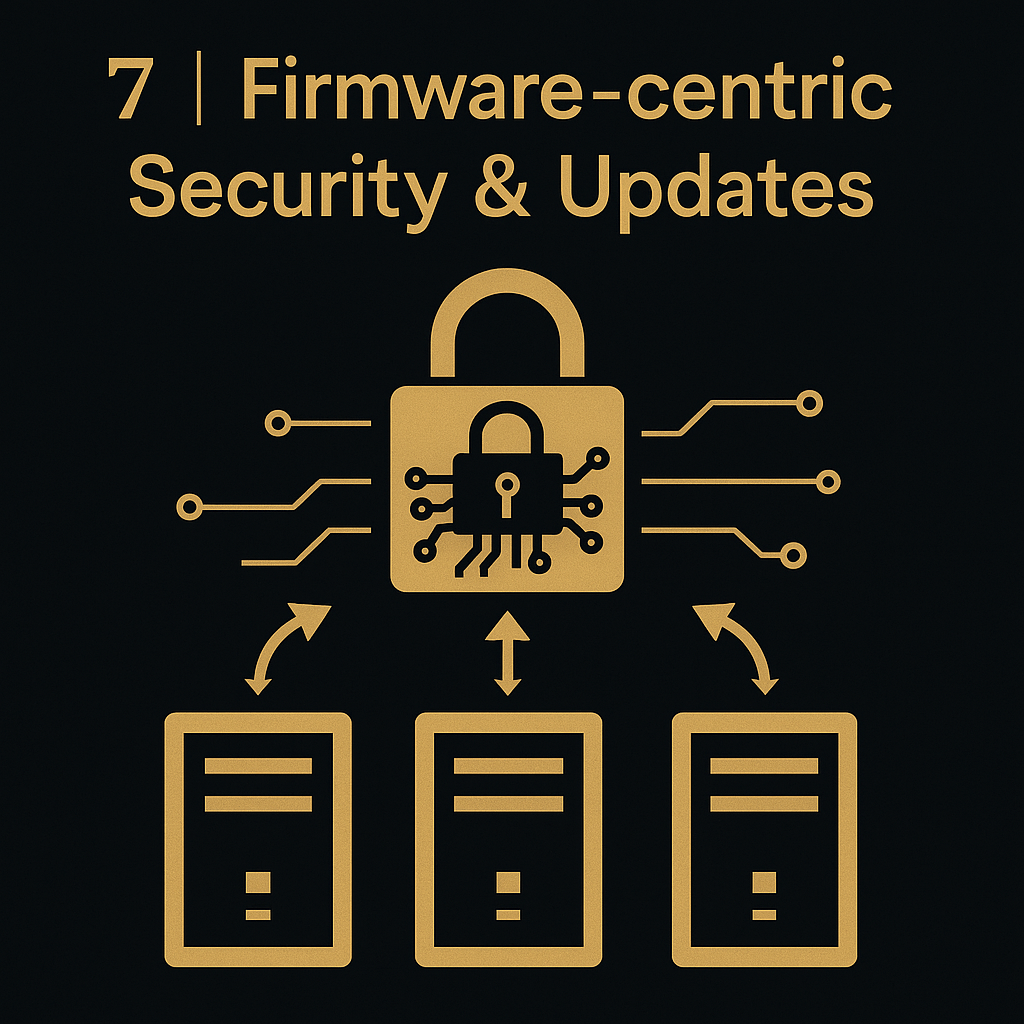
7 | Firmware-centric security & updates
Because today’s UPS is essentially an edge computer, firmware patching is part of maintenance:
- Secure-boot and signed updates prevent malicious code that could alter rectifier firing angles.
- Rolling-firmware strategy—update one module at a time while the rest stay in service, leveraging the self-isolating core design (section 2).

8 | Emerging tech to watch
| Technique | What to monitor |
|---|---|
| Solid-state transformers (SST) front-ending the UPS | Replaces bulk 50/60 Hz magnetics; fewer conversion stages and lower fault-energy into the rectifier island. Early pilots are running at hyperscale sites. csa.catapult.org.uk |
| Immersion-cooled power modules | Eliminates forced-air fans; promises order-of-magnitude lifetime gains for gate drivers and capacitors (project ELIPS). |
| Edge-deployed digital twins | Simulate stress on each IGBT leg in real time; if junction temp vs. mission profile diverges, the CMMS raises an alert automatically. |
Putting it all together
- Baseline audit – start with an IR scan and PQ signature capture; store both as the “gold image” for each UPS.
- Wrap CBM around the data – stream sensor values to your analytics dashboard; aim for a single composite health index.
- Plan refresh paths – when the next major overhaul is due, shift to SiC modules and a modular core frame so future component swaps are live-safe.
- Lock in the admin cycle – align firmware patch cadence with capacitor/fan replacement windows to minimise total touch-time.
 Data Center Health